json_serializable: boring JSON that survives refactors
json_serializable is useful because it focuses on generated codecs, converters, checked mode, and API model boundaries. The important engineering move is to place the package behind a clear boundary, so your Flutter UI depends on a stable capability rather than a vendor-shaped API.
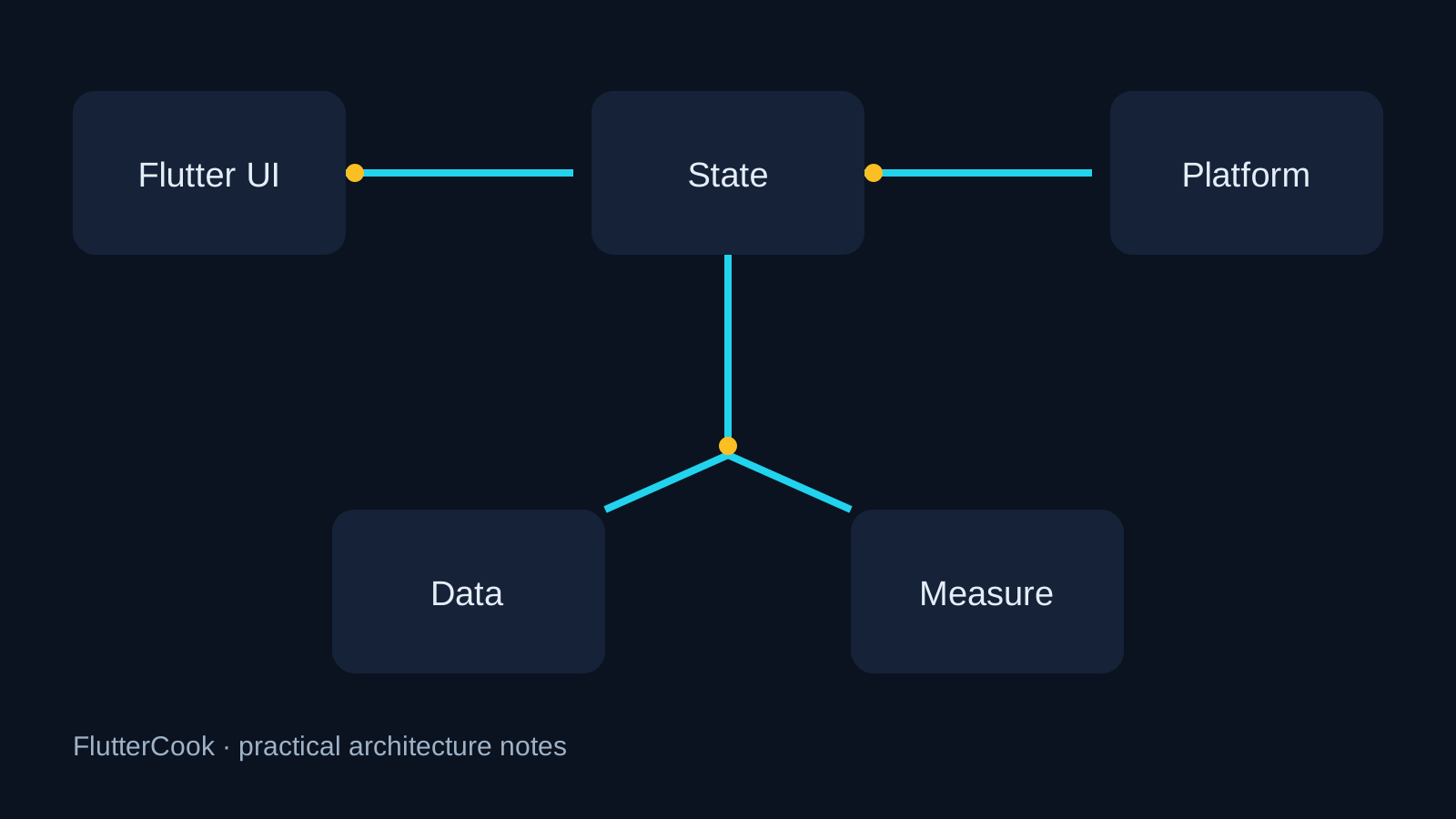
What the library should own
- Keep package calls inside a named adapter or feature boundary.
- Make lifecycle, errors, and loading state part of a testable contract.
- Expose only the capability the app needs; hide implementation details from the whole tree.
A focused starting point
@JsonSerializable()
class User {
  const User({required this.id, required this.displayName});
  final String id;
  final String displayName;
  factory User.fromJson(Map<String, dynamic> json) => _$UserFromJson(json);
  Map<String, dynamic> toJson() => _$UserToJson(this);
}
Production checklist
- Read the README and changelog for the exact version you pin.
- Add one test for lifecycle, failure, and app background/foreground behavior.
- Verify every platform your product supports, not only the developer machine.
- Record ownership, upgrade cadence, and rollback notes in the repository.
Common pitfall
Keep transport DTOs separate from domain entities when API evolution is frequent.
Takeaway
A good open-source library does not replace architecture. It makes one difficult boundary clearer, observable, and easier to replace.
Originally published on FlutterCook. Read the latest version there — that copy is the one kept up to date.
Nhận xét
Đăng nhận xét